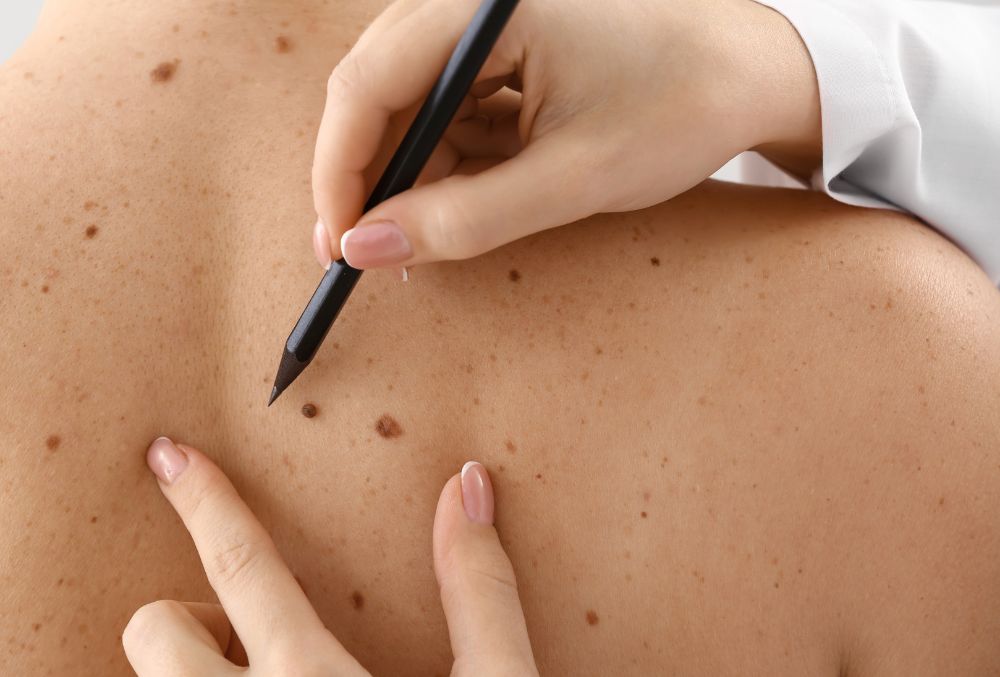
The skin is the largest organ in our body and serves as our first line of defense against external agents. Precisely because of this function, it is constantly exposed to risk factors, including ultraviolet (UV) radiation, which is the primary cause of skin cancer. Knowing and recognizing these risks early is crucial: today, in fact, many forms of skin cancer are treatable, and melanoma, in particular, can be cured if diagnosed in its early stages.
Skin cancers are generally divided into two main categories:
Non-melanoma skin cancers, such as basal cell carcinoma and squamous cell carcinoma, which generally grow slowly and have a low tendency to metastasize
Melanoma, which is less common but more aggressive due to its ability to spread to other organs
In recent years, there has been an increase in incidence, primarily due to greater exposure to UV rays and changes in lifestyle.
Melanoma originates in melanocytes and can develop on healthy skin or from a pre-existing mole. Its danger lies in how quickly it can progress, but at the same time, it is one of the cancers for which early diagnosis radically improves the prognosis.
When detected in its early stages, melanoma is highly treatable, often with a simple surgical procedure. Survival rates are, in fact, very high in the early stages.
Paying attention to changes in your skin is the first step toward early diagnosis. The ABCDE rule helps identify suspicious lesions:
A – Asymmetry
B – Irregular edges
C – Uneven color
D – Increasing size
E – Evolution over time
These symptoms may be accompanied by itching, bleeding, or the appearance of a new skin lesion that looks different from the others.
The main risk factors include intense and intermittent sun exposure, sunburn—especially during childhood—fair skin, and having numerous moles. A family history of melanoma should not be underestimated.
Prevention relies on simple yet essential habits, such as using adequate sunscreen every day, avoiding sun exposure during the middle of the day, protecting your skin with clothing and accessories, and avoiding tanning beds
Early diagnosis is made through a dermatological examination and the use of dermatoscopy, a non-invasive technique that allows for a detailed analysis of skin lesions. If a lesion is suspected to be malignant, it is removed and sent for histological examination.
Treatment for melanoma depends on the stage:
Early stages: surgical excision, which is often curative
Advanced stages: immunotherapy and targeted therapies, which have revolutionized the prognosis
Thanks to advances in medicine, even in the most complex cases, treatment options are becoming increasingly effective and personalized.
Preventing skin cancer starts with greater awareness. By checking your skin, recognizing the warning signs, and getting regular checkups, you can catch the disease early, significantly increasing your chances of recovery.