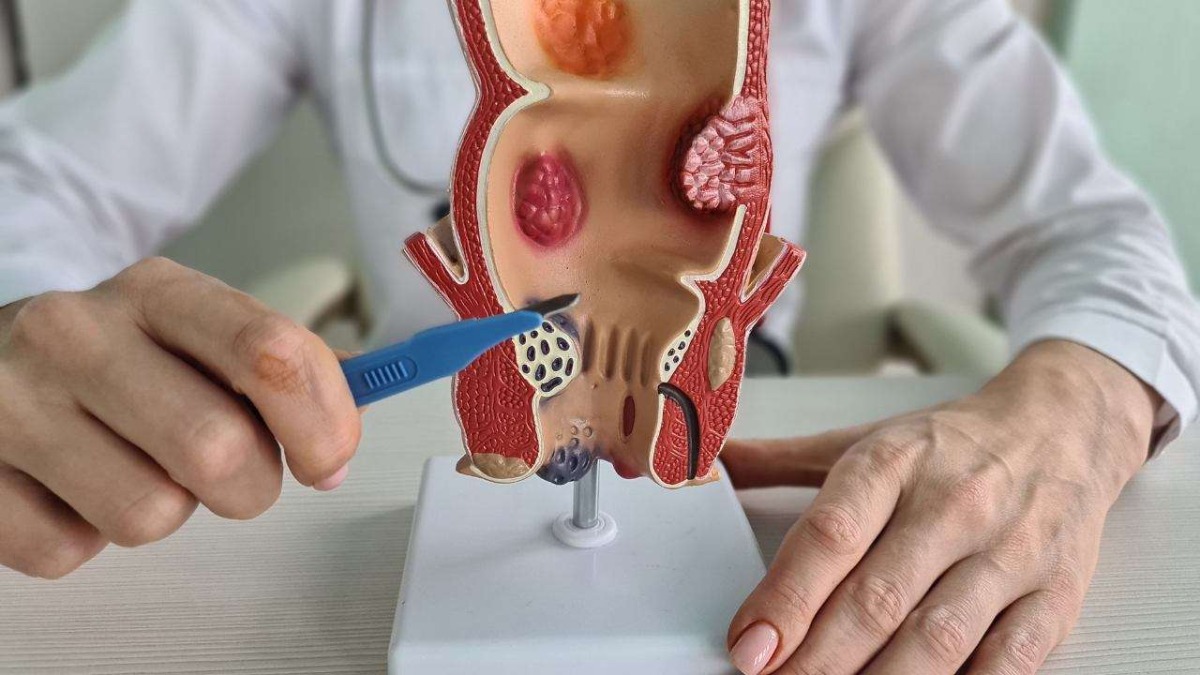
Many people confuse hemorrhoids with anal fissures, as both cause discomfort in the same area and can cause pain or bleeding. However, they are two different disorders with specific causes, symptoms and treatments. Knowing them is crucial to receiving the right diagnosis and effective treatment
Hemorrhoids are dilations of the veins of the hemorrhoid plexus, located in the rectum and anus. We all have a small cushion of veins in that area, but when these become inflamed or swollen, it is called hemorrhoidal disease.
There are two types: internal hemorrhoids, which are located inside the rectum and often do not cause pain, but can cause bleeding; and external hemorrhoids, which develop under the skin of the anus and can be very painful, especially if a thrombus (hemorrhoidal thrombosis) forms.
The main symptoms are bleeding during or after evacuation, anal itching or burning, pain, feeling of weight or swelling, discharge or irritation of the surrounding skin.
Hemorrhoids are most commonly caused by chronic constipation or excessive strain during defecation, pregnancy, sedentary lifestyle, low-fiber diet, and overweight or obesity.
Treatment varies according to severity: milder forms are initially treated by modifying diet (increasing fiber and water intake) and changing lifestyle by avoiding long periods of sitting, instead favoring movement and physical activity. They are also treated with medical drug therapies through the use of soothing ointments, phlebotonic drugs, and local anti-inflammatory drugs.
For more severe situations, outpatient surgical procedures of elastic ligation, sclerotherapy, or photocoagulation are performed; up to and including actual surgery for more advanced and relapsing cases.
Anal fissure is a small, cut-like fissure of the anal mucosa that causes intense pain during defecation. It is a very common disorder, especially in individuals with chronic constipation.
The main symptoms are: sharp, burning pain during and after evacuation, bright red bleeding on the toilet paper, spasm of the anal sphincter, and sensation of cutting or tearing.
Unlike hemorrhoids, anal fissures are caused by constipation and hard stools, prolonged diarrhea, natural childbirth, anal intercourse, and inflammatory bowel disease.
In these cases, treatment is more conservative and a high-fiber diet, hydration, warm baths, and sphincter relaxing ointments (nitroglycerin-based or calcium channel blockers) are recommended. More advanced therapies include botulinum toxin injections to reduce muscle spasm. Only for chronic or medically resistant cases is surgery (lateral sphincterotomy) proposed.
In light of the above then, how to distinguish hemorrhoids from fissures?
It is important to consult a proctology specialist if pain or bleeding persists for more than a few days and discharge or swelling appears. If underestimated, symptoms may recur and recur frequently with little effectiveness of home treatments.
Early consultation enables accurate diagnosis and targeted treatment, avoiding complications or chronification.
Both hemorrhoids and anal fissures are common disorders, but with different causes and treatment approaches. Proper evaluation by a professional is the key to quickly returning to wellness and preventing recurrence.